Sword Skills Guide
Master Echoes of Aincrad's sword skills — SP resource management, stat scaling, equip limits, combo integration, and the interrupt system. Everything you need to build around your favourite skills.
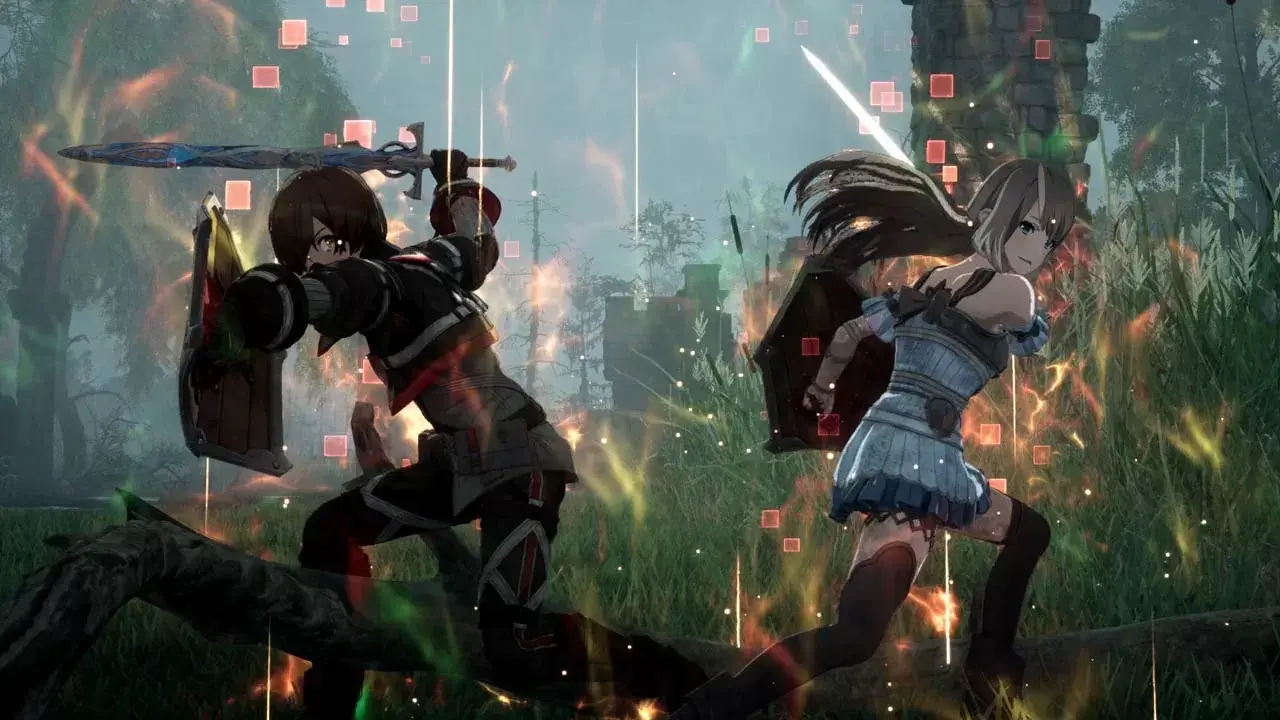
Sword skills are the strongest offensive actions in the game. Managing SP, cooldowns, and equip slots is the core of advanced play.
Quick Reference
| Detail | Value |
|---|---|
| Skills per weapon type | Roughly 10 |
| Equipped at once | Up to 3 |
| Primary resource | SP (refilled by attacking or potions) |
| Chain-input system | None; free combination via stamina & SP |
| Interrupt potential | Yes, subject to attack-priority system |
| Skill unlock method | Weapon proficiency (Thrill of the Unknown quest at Proficiency 10) |
| Max skill level | 5 (re-spec via the chest at the inn) |
| Main SP stat | Mind |
| Main damage-scaling stat | Dexterity |
Looking for the Skill Tree?
Sword Skills are the attacks you equip and spend SP on during combat. The skill tree is the progression layer that improves those skills through stat, weapon, survival, and partner nodes.
Open Skill Tree GuideStat Scaling Overview
| Stat | Effect on Sword Skills | Build Priority |
|---|---|---|
| Mind | Increases maximum SP pool | Secondary: enables more skills per rest |
| Dexterity | Increases sword-skill damage | Primary: core offensive stat for skill builds |
| Strength | Increases basic attack damage | Weapon-dependent: focus for heavy weapons |
What Are Sword Skills?
Sword skills are Echoes of Aincrad's special attacks — powerful offensive moves that sit on top of your basic light and heavy attack combos. Each weapon type has its own pool of roughly ten unlockable sword skills, learned as you progress through the campaign. Unlike normal attacks, sword skills draw from a dedicated SP resource and go on cooldown after each use, meaning you cannot simply spam your strongest hit to erase a health bar. They are the highest-damage tools in your kit and the key to burst damage, crowd control, and interrupting enemy attacks.
Equip Slots & HUD Layout
Up to three sword skills can be equipped on a given weapon at the same time. The equipped skills are shown at the bottom right of the screen and fire on the primary inputs. Two slots are mapped to the right trigger and right bumper respectively, while holding the action-shift button swaps the HUD to expose your partner's Support Skill and Combination Skill instead of a third sword skill slot. This means each weapon loadout forces a real choice between offence and utility — each slot can be the difference between a reliable gap-closer and a slow-but-devastating finisher.
SP — The Sword Skill Resource
Sword skills draw from SP, a resource meter entirely separate from stamina. Stamina governs regular attacks, dodges, and guards, while SP is spent specifically to fire off a sword skill. SP rebuilds through aggressive play: landing regular attacks on enemies feeds the meter back up. A specific kind of potion can also be consumed to restore SP directly. The intended combat flow is that while cooldowns are ticking on your strongest hits, you weave in basic attack strings to refill SP for the next activation — rather than standing back and waiting. Two stats directly affect sword-skill performance: Mind increases the maximum SP pool, and Dexterity increases sword-skill damage, making them the priority stats for skill-heavy builds.

SP refills through aggressive play. Weave basic attacks between skill activations to keep your SP topped up.
Stat Scaling — Mind & Dexterity
Two character attributes have a direct effect on sword-skill performance and should be prioritised on any build that relies heavily on skills. Mind increases your maximum SP pool, allowing more sword skills to be used between rest stops and potion breaks. Dexterity increases sword-skill damage and is the primary scaling stat that many weapons favour, making it the core offensive stat for skill-heavy builds. Weapons that lean into skill-spam playstyles (such as Rapier and Dagger) benefit disproportionately from Dexterity investment, while slower weapons that use skills as finishers may prefer Strength for their basic attacks while still investing in Mind for the occasional burst window.
Pro tip: If your build relies on sword skills for most of its damage, prioritise Dexterity first for damage, then Mind for sustain. A 3:1 Dex-to-Mind ratio is a strong starting point for most skill-centric builds.
How Sword Skills Fit with Combos
Sword skills layer on top of regular light and heavy attack combos rather than replacing them. Unlike prior action-title entries in the SAO game series, Echoes of Aincrad does not use a dedicated timing-based chain input for linking one sword skill into another — there is no special prompt or cue to hit on the exact frame a skill ends. Instead, basic attacks and sword skills can be woven together freely, as long as you have the stamina for normal swings and the SP for the next skill. The pacing of each sequence comes from resource management rather than from a separate chain meter. Sword skills are strongest when used to extend a combo after a successful parry or dodge slash, where the enemy is briefly open to extra damage.
Interrupting Enemy Attacks
A sword skill used just before an incoming enemy attack lands can interrupt that attack outright, stopping the swing and leaving the enemy open. This is not universal — some attacks cannot be cut through, pointing to a priority system where certain skills or certain enemy moves take precedence over others. When the timing and priority both line up, the result is a mid-combo counter that folds into the wider Parry, Dodge, and Reversal Slash family of counterattacks. Both systems share the same instinct: read the enemy, act at the right moment, and trade their attack for damage on your end. Blue ring indicators that appear during an enemy's wind-up often signal a good interrupt opportunity.
Sword Skills Per Weapon Type
Each of the six weapon types — Sword, Rapier, Dagger, Mace, Two-Handed Sword, and Two-Handed Axe — has its own pool of around ten confirmed sword skills. The Sword's kit covers balanced crowd control and damage (Rage Spike, Horizontal Quad Slash, Slanted Edge, Vertical Slash, Breakrift, Vertical Arc, Rage Impact, Horizontal Arc, Horizontal Slash). The Rapier leans on speed and precision (Linear Strike, Lier Lunge, Phantom Thrust, Lateral Lunge, Pyre Dance, Oblique Lunge, Lightstreak, Tri Slash, Rumble Horn, StarPierce). The Dagger specialises in mobility and status pressure (Rapid Bite, Swarm Sting, Trend Edge, Flick and Twist, Single Stab, Disorder, Fulmination, Incision, Rising Helix, Dagger Barrage). The Mace breaks guards and staggers (Wave Bash, Solid Sling, Spiritfall, Clashbang, Beatdown, Bull Rush, Double Cleave, Riot Smash, Tri-Horn Medley, Absorbing Strike). The Two-Handed Sword trades speed for heavy burst (Brave Leap, Backlash, Cyclone, Swordfall, Avalanche, Blade Torrent, Brutal Fang, Piercing Blast, Vertical Blaster, Cascade). The Two-Handed Axe is pure area damage (Chain Seeker, Meteor Strike, Whirlwind, Fierce Shock, Roaring Jolt, Volcano Slam, Rockfang, Rising Cross, Gravity, Serpent Strike). You can only equip three skills at a time, so the real build choice is which three best cover the fights ahead.
Weapon Proficiency & Skill Unlocks
Sword skills unlock through weapon proficiency, which rises as you earn Weapon EXP by defeating enemies with a given weapon type. Each skill has a specific proficiency-level gate: for example, Vertical Arc unlocks at Sword Proficiency Lv. 7 and Tri Slash at Rapier Proficiency Lv. 6, so deeper skills open up the longer you commit to one weapon. Reaching Proficiency 10 with any weapon unlocks the side quest 'Thrill of the Unknown' in the Town of Beginnings. Completing that quest — which sends you through the Teardrop Cave dungeon — unlocks the Sword Skill Leveling function at the upgrade menu. From there each skill can be leveled to a maximum of 5, and you can reallocate your sword skill points using the chest at the inn if you want to re-spec a loadout. Specialising in one or two weapons fills out their full skill lists much faster than spreading playtime across all six types.
Sword Skills vs Partner Special Skills
While your character's sword skills occupy the primary input layer (right trigger and right bumper), your partner's abilities sit on a separate layer accessed by holding the action-shift button. This swap reveals the HUD for your partner's Support Skill (a cooldown-based assist) and Combination Skill (a team-up attack with both characters). These partner skills are covered in more detail on the Partners guide. Managing the toggle between your own sword skills and your partner's special skills mid-combat is one of the key skill checks in the game.
Deeper into combat
Explore related systems and tools.